


Vera Alexander was a Holocaust survivor whose testimony provided chilling insights into the inhumane experiments conducted by Josef Mengele at Auschwitz-Birkenau. As a Jewish prisoner, she was assigned to work as a caretaker in the barracks for twins, a group Mengele exploited in his twisted pursuit of scientific discovery. Alexander’s testimony, shared after the war, has become an essential part of the historical record documenting Nazi crimes during the Holocaust.
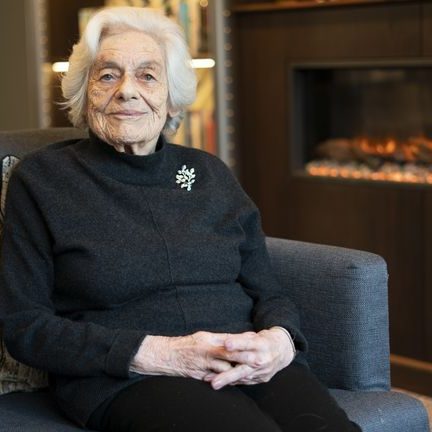
Vera Alexander was born in 1921 in Czechoslovakia to a Jewish family. Little is known about her early life, but like many European Jews, her life was upended by the rise of Nazi Germany and the outbreak of World War II. By 1944, the Nazi regime had begun its systematic deportation of Jews from Hungary and surrounding territories.
Alexander was among the millions of Jews deported to Auschwitz-Birkenau, the largest and most infamous Nazi extermination camp. Upon arrival, she was separated from her family. Most of them were sent to the gas chambers, while she was chosen for labor due to her physical fitness and skills.
At Auschwitz, Alexander was assigned to supervise a barracks where twins were housed. These children, often taken forcibly from their families, were the focus of Josef Mengele’s pseudoscientific experiments. Known as the “Angel of Death,” Mengele sought to use twins to study genetic inheritance and racial superiority, often subjecting them to cruel and often fatal procedures.
Alexander’s role as caretaker gave her firsthand knowledge of Mengele’s methods and the suffering of the twins. She described how the children were treated as mere test subjects, often injected with unknown substances, operated on without anesthesia, and subjected to comparative experiments in which one twin was killed to perform autopsies on both siblings.
One of the most haunting stories Alexander shared involved twins who were sewn together by Mengele in a crude attempt to create conjoined twins. The experiment left the children in excruciating pain and resulted in their deaths. Alexander recounted that Mengele showed no remorse for his actions and saw the children not as human beings but as tools for his warped scientific ambitions.
Vera Alexander survived Auschwitz and was liberated in 1945. However, the trauma of her experiences, particularly her close proximity to the children Mengele experimented on, left an indelible mark on her. She carried the memories of the suffering she witnessed and the stories of the twins with her for the rest of her life.
In the years following the Holocaust, Alexander became an important witness in the effort to document the atrocities of Auschwitz and Josef Mengele’s crimes. Her testimony was instrumental in exposing the brutal reality of the twin experiments. She shared her experiences in multiple interviews, including one for the Steven Spielberg-led USC Shoah Foundation’s Visual History Archive, which recorded testimonies of Holocaust survivors worldwide.
Alexander’s accounts provided rare and detailed insights into Mengele’s actions and the daily horrors of Auschwitz-Birkenau. Her willingness to speak out ensured that the stories of the twins and their suffering were preserved for future generations.
Vera Alexander’s testimony serves as a critical reminder of the human cost of Nazi ideology and the dangers of dehumanization. Through her accounts, the world has gained a deeper understanding of the experiences of victims who endured unimaginable suffering in the name of pseudoscience.
Her courage in bearing witness has contributed to Holocaust education and remembrance efforts, ensuring that the atrocities she survived are never forgotten. Alexander’s story also underscores the resilience of survivors, who, despite their trauma, have dedicated their lives to preserving history and advocating against hatred and injustice.
