


Sigmund Rascher was a German physician and SS officer notorious for his role in conducting inhumane and deadly experiments on prisoners during the Holocaust. His actions are among the most egregious violations of medical ethics in history, making his name synonymous with the atrocities committed in Nazi concentration camps.
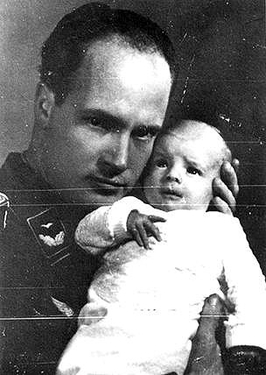
Sigmund Rascher was born on February 12, 1909, in Munich, Germany. He studied medicine at various universities in Germany and earned his medical degree in the early 1930s. In 1933, Rascher joined the National Socialist German Workers’ Party (Nazi Party), and by 1936, he became a member of the SS, the paramilitary organization responsible for many of the Holocaust’s crimes. His connections within the Nazi regime, particularly with Heinrich Himmler, the head of the SS, facilitated his rise in prominence.
Rascher’s career as a physician took a sinister turn during World War II when he began conducting medical experiments on prisoners in Nazi concentration camps, most notably at Dachau. These experiments were ostensibly designed to benefit the German military by investigating ways to improve survival conditions for soldiers. However, they were characterized by extreme cruelty and complete disregard for human life.
One of Rascher’s most infamous projects was the high-altitude experiments conducted between 1942 and 1943. Using a decompression chamber, Rascher subjected prisoners to conditions simulating altitudes of up to 68,000 feet to study the effects of high-altitude flight. Many subjects lost consciousness, experienced excruciating pain, or died during these experiments. Survivors often suffered long-term physical and psychological damage.
Another area of Rascher’s research was hypothermia, which aimed to discover methods for reviving German soldiers who had been exposed to freezing conditions. Prisoners were submerged in ice-cold water or left naked in subzero temperatures. Many died from exposure, and the survivors were often killed afterward to allow autopsies.
Rascher also conducted experiments on blood coagulation using a substance called Polygal, derived from beet and apple pectin. Prisoners were deliberately wounded to test whether Polygal could stop bleeding. These experiments were carried out without anesthesia, causing immense suffering and death.
Rascher’s career unraveled due to his fraudulent activities and unethical behavior. In addition to fabricating experimental results, Rascher falsely claimed to have fathered three children as part of a Nazi program promoting Aryan reproduction. It was later revealed that the children were kidnapped, leading to Himmler’s disillusionment with him.
In 1944, Rascher was arrested on charges of corruption, kidnapping, and murder. Stripped of his SS rank, he was imprisoned at Dachau, the very camp where he had conducted his experiments. On April 26, 1945, shortly before the camp’s liberation by Allied forces, Rascher was executed by his former SS colleagues.
Sigmund Rascher’s experiments remain a grim reminder of the atrocities committed during the Holocaust. His work, devoid of scientific rigor or ethical considerations, exemplifies the dangers of unchecked power and the misuse of science. The Nuremberg Doctors’ Trial (1946–1947) brought attention to such crimes and resulted in the establishment of the Nuremberg Code, a set of ethical principles for human experimentation. Rascher’s name endures as a symbol of the darkest chapters in medical history, serving as a cautionary tale for future generations.
Rascher fell out of favor with the Nazi leadership due to fraudulent activities and was executed in 1945.
