


Miklós Nyiszli (June 17, 1901 – May 5, 1956) was a Hungarian Jewish physician and one of the few survivors of Josef Mengele’s brutal regime at Auschwitz-Birkenau. As a prisoner and medical professional, Nyiszli was forced to assist in horrific medical experiments and autopsies under Mengele’s direct orders. His memoir, Auschwitz: A Doctor’s Eyewitness Account, remains a haunting and invaluable account of the Holocaust, offering a detailed insider’s perspective on the atrocities committed in Auschwitz’s crematoria and the Nazi obsession with racial purity.
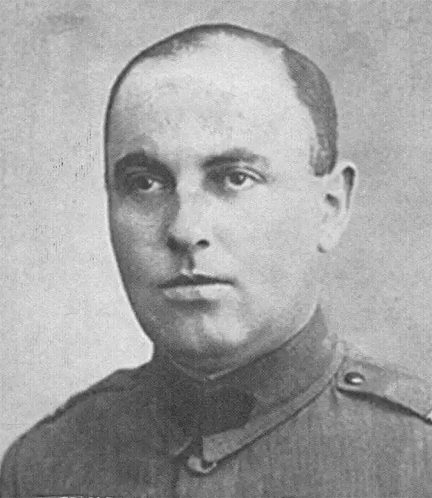
Miklós Nyiszli was born on June 17, 1901, in Szilágysomlyó, Austria-Hungary (now Șimleu Silvaniei, Romania). He pursued his medical education in Germany, specializing in forensic pathology. By the 1930s, he had established a successful medical practice in Hungary, where he lived with his wife and daughter.
In 1944, after the Nazi occupation of Hungary, Nyiszli and his family were deported to Auschwitz-Birkenau during the mass deportation of Hungarian Jews. It was here that his medical expertise would simultaneously save his life and expose him to unimaginable horrors.
Upon arrival at Auschwitz, Nyiszli was separated from most of his family, who were sent to the gas chambers. His medical background, however, caught the attention of the SS. Selected by Josef Mengele, the infamous camp doctor, Nyiszli was given the macabre role of a forensic pathologist within the Sonderkommando, the group of Jewish prisoners forced to manage the crematoria.
Nyiszli became Mengele’s personal pathologist, working in a laboratory near the crematoria. His primary task was to perform autopsies on prisoners who had been subjected to Mengele’s gruesome experiments, particularly those involving twins and people with physical abnormalities. Mengele sought to “prove” Nazi racial theories through pseudoscientific studies, often involving grotesque and fatal procedures.
Nyiszli described how he conducted autopsies on children and adults, documenting internal organs and genetic traits at Mengele’s insistence. These were often victims of experiments, including those injected with chemicals, exposed to diseases, or killed through dissection.
Nyiszli was also closely associated with the Sonderkommando units. These prisoners, working under the threat of execution, were forced to process the bodies of gas chamber victims, cremate the remains, and dispose of the ashes. Nyiszli’s proximity to the crematoria gave him an unparalleled understanding of Auschwitz’s industrialized killing system. He witnessed firsthand the systematic murder of thousands of men, women, and children daily.
Through his work and interactions, Nyiszli developed a unique perspective on the psychological toll the Holocaust took on both victims and perpetrators. He bore witness to the humanity and resilience of the Sonderkommando prisoners, many of whom resisted their oppressors, including participating in the October 1944 uprising at Auschwitz.
Nyiszli survived Auschwitz and its death marches thanks to the chaos of the war’s final months. He was eventually liberated by U.S. forces in May 1945. Tragically, most of his immediate family perished in the Holocaust, though his wife and daughter miraculously survived.
After the war, Nyiszli returned to Hungary, where he attempted to rebuild his life and document his experiences. His writings became a critical firsthand account of the atrocities at Auschwitz, including the workings of the crematoria and Mengele’s experiments. Nyiszli’s memoir was first published in Hungarian in 1946 under the title Dr. Mengele boncolóorvosa voltam az Auschwitz-i krematóriumban (I Was Doctor Mengele’s Pathologist at Auschwitz’s Crematoria). It was later translated into several languages and became a seminal work in Holocaust literature.
Nyiszli’s memoir is both a valuable historical document and a deeply personal account of survival under horrific conditions. His detailed descriptions of Auschwitz-Birkenau provide insights into the Nazi death machine and the role of medical professionals in facilitating genocide.
However, Nyiszli’s account has not been without controversy. Some critics have questioned the accuracy of his descriptions and the extent of his involvement in Mengele’s work. Others have debated the ethics of his role, arguing that his forced collaboration raised complex moral questions about survival and complicity under duress. Despite these debates, Nyiszli’s testimony remains one of the most detailed records of life inside Auschwitz and has been used as evidence in war crimes trials and Holocaust studies.
Miklós Nyiszli passed away on May 5, 1956, at the age of 54. His work continues to be studied and referenced by historians, educators, and researchers seeking to understand the Holocaust and its impact on humanity.
Nyiszli’s memoir serves as a chilling reminder of the dangers of dehumanization, the moral dilemmas faced by those forced to participate in atrocities, and the enduring need to remember the victims of one of history’s darkest chapters. His courage in documenting these experiences has ensured that the horrors of Auschwitz will never be forgotten.
