


Eva Mozes Kor (January 31, 1934 – July 4, 2019) was a Holocaust survivor, author, educator, and human rights advocate known for her remarkable resilience and her controversial advocacy for forgiveness. A survivor of Auschwitz-Birkenau and one of the few to endure Josef Mengele’s horrific twin experiments, Eva dedicated her life to sharing her story, educating others about the Holocaust, and promoting reconciliation. Her story remains an enduring testament to the human spirit and the power of forgiveness.
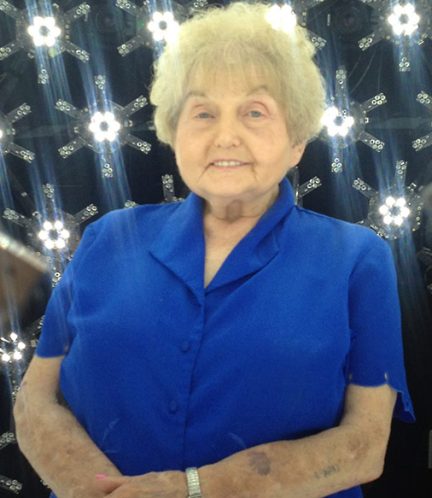
Eva Mozes was born on January 31, 1934, in the small village of Portz, Romania, into a Jewish farming family. She grew up alongside her twin sister, Miriam, and their two older sisters. The Mozes family lived a peaceful life, but their world was shattered in 1944 when Nazi forces occupied Hungary and began deporting Jews to concentration camps.
At just ten years old, Eva and her family were sent to Auschwitz-Birkenau, the notorious Nazi extermination camp. Upon arrival, Eva and Miriam were forcibly separated from their parents and siblings, whom they never saw again. The twins were selected for Josef Mengele’s experiments, a decision that would forever change their lives.
As part of Mengele’s cruel obsession with genetics and eugenics, Eva and Miriam were subjected to inhumane medical experiments designed to study the differences between twins. Mengele injected them with unknown substances, took blood samples, and performed invasive and painful procedures.
Eva recalled moments of excruciating pain and sickness, including being injected with substances that left her bedridden for weeks. Mengele reportedly told her she had only two weeks to live, but through sheer willpower, she survived. Miriam, too, endured the experiments, which caused lifelong kidney damage that eventually contributed to her death in 1993.
Eva’s survival was an act of defiance against the odds. She often described how her determination to live and care for Miriam gave her strength in the darkest of times. In January 1945, the Soviet Army liberated Auschwitz, and Eva and Miriam were among the few survivors.
\After liberation, Eva and Miriam returned to Romania, eventually immigrating to Israel in 1950. There, Eva served in the Israeli Army and later met her husband, Michael Kor, a Holocaust survivor from the United States. The couple moved to Terre Haute, Indiana, where they raised two children and began rebuilding their lives.
For many years, Eva rarely spoke about her experiences at Auschwitz. However, in the 1970s, she began sharing her story publicly, determined to ensure that the horrors of the Holocaust would never be forgotten.
\In 1984, Eva founded the CANDLES Holocaust Museum and Education Center (CANDLES stands for “Children of Auschwitz Nazi Deadly Lab Experiments Survivors”) in Terre Haute, Indiana. The organization was dedicated to locating and uniting other twin survivors of Mengele’s experiments, preserving their stories, and educating the public about the Holocaust.
The museum became a cornerstone of Eva’s work as an educator, offering programs and exhibits that illuminated the horrors of the Holocaust while promoting messages of hope, resilience, and tolerance. Tragically, the museum was destroyed in a 2003 arson attack, but it was rebuilt and reopened in 2005, thanks to Eva’s tireless determination.
In the 1990s, Eva took a controversial step that garnered both praise and criticism: she publicly forgave the Nazis, including Josef Mengele. Her decision stemmed from a deeply personal journey of healing. Eva believed that forgiveness was not about excusing the perpetrators but about freeing oneself from the burden of hatred and victimhood.
In 1995, during a trip to Auschwitz, Eva declared her forgiveness in a ceremony at the camp. She later met and befriended Hans Münch, a former SS doctor at Auschwitz who expressed remorse for his role. This act of reconciliation sparked global debate. Many Holocaust survivors and Jewish leaders applauded her courage, while others felt that forgiveness was neither appropriate nor possible in the context of such atrocities.
Eva addressed the criticism by emphasizing that forgiveness was her choice and a personal way to reclaim her power. “I forgave the Nazis not because they deserve it, but because I deserve it,” she famously said.
Throughout her life, Eva traveled the world to share her story, giving lectures and interviews that shed light on the Holocaust and its aftermath. Her testimonies provided crucial insight into the experiences of Mengele’s twin victims and the resilience of survivors.
Eva’s message went beyond recounting the horrors of Auschwitz; she sought to inspire others to overcome hatred and bitterness. She frequently spoke to young audiences, urging them to stand up against injustice and intolerance in all forms.
Her memoir, Surviving the Angel of Death: The Story of a Mengele Twin in Auschwitz (co-authored with Lisa Rojany Buccieri), detailed her experiences and became a vital resource for educators and Holocaust studies programs.
Eva Mozes Kor passed away on July 4, 2019, during her annual trip to Auschwitz with a group of students and educators. She was 85 years old. Her death marked the end of a life dedicated to education, advocacy, and reconciliation, but her legacy continues through the CANDLES Holocaust Museum and the countless lives she touched.
Eva’s story is a powerful reminder of humanity’s capacity for resilience and the importance of remembering history’s darkest chapters to prevent their recurrence. Through her work, she transformed her unimaginable suffering into a beacon of hope and a call to action for future generations.
