


Carl Clauberg (September 28, 1898 – August 9, 1957) was a German physician and SS officer who conducted inhumane medical experiments on prisoners during the Holocaust. He is best known for his experiments on forced sterilization, which aimed to develop efficient methods to sterilize large populations as part of the Nazi regime’s eugenics and racial purity policies. Clauberg’s actions represent one of the most grotesque abuses of medical science in history.
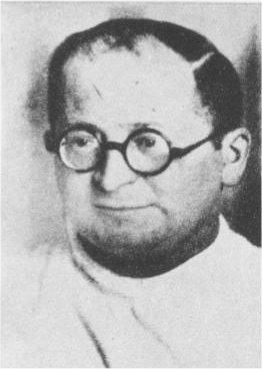
Carl Clauberg was born on September 28, 1898, in Wuppertal, Germany. He pursued a medical degree, graduating in 1925, and later specialized in gynecology. Clauberg established himself as a prominent researcher in reproductive medicine, particularly in the treatment of infertility. By the 1930s, he had built a reputation as an expert in gynecological disorders and worked at prestigious hospitals and clinics.
Clauberg joined the Nazi Party in 1933, aligning himself with the regime’s ideology of racial purity. His expertise in reproductive medicine caught the attention of high-ranking Nazi officials, and he soon became involved in the regime’s plans for mass sterilization as part of their broader efforts to eliminate groups they deemed undesirable.
In 1942, Clauberg approached Heinrich Himmler, head of the SS, with a proposal to develop a cheap and efficient method for mass sterilization. Himmler approved the plan, and Clauberg was given access to prisoners at Auschwitz-Birkenau, where he carried out his experiments on Jewish and Roma women from 1943 to 1944.
Clauberg’s experiments focused on non-surgical sterilization methods. His primary approach involved injecting a caustic chemical substance directly into the uteruses of women, which caused severe inflammation, scarring, and obstruction of the fallopian tubes. This method was intended to render women infertile without the need for surgical procedures.
The experiments were excruciatingly painful, often performed without anesthesia, and caused significant physical harm. Many women suffered from chronic pain, infections, and severe internal injuries. Some died as a result of the experiments, while others were killed to allow Clauberg to examine their reproductive organs during autopsies.
Clauberg’s goal was to perfect a method that could sterilize thousands of women in a single day, aligning with the Nazi regime’s genocidal objectives. While his experiments produced no viable medical advancements, they inflicted immense suffering on his victims and demonstrated the regime’s complete disregard for human life.
After the war, Carl Clauberg was captured by Soviet forces and put on trial for war crimes in 1948. He was sentenced to 25 years in prison but was released in 1955 as part of a prisoner exchange agreement between the Soviet Union and West Germany. Upon his release, Clauberg returned to West Germany and openly sought to resume his medical career.
His return sparked outrage, particularly among Holocaust survivors and human rights advocates. In 1955, survivors of his experiments publicly identified him, leading to his re-arrest in 1956. Clauberg was charged with crimes against humanity, but he died of a heart attack on August 9, 1957, in his prison cell in Kiel before he could stand trial.
Carl Clauberg’s experiments are a chilling example of how medical expertise can be weaponized to commit atrocities when ethical principles are abandoned. His work, devoid of scientific rigor or humanity, caused unimaginable suffering and stands as a testament to the horrors of the Holocaust.
Clauberg’s crimes, along with those of other Nazi doctors, were instrumental in shaping the Nuremberg Code of 1947, which established ethical guidelines for medical research to prevent future abuses. His name remains synonymous with the darkest abuses of medical science, serving as a stark reminder of the necessity for accountability, ethical oversight, and the protection of human rights in all fields of research.
