


Josef Mengele (March 16, 1911 – February 7, 1979) was a German SS officer and physician notorious for his role in human experimentation at Auschwitz-Birkenau during the Holocaust. Known as the “Angel of Death,” Mengele conducted horrific and unethical experiments on prisoners, particularly children and twins, under the guise of advancing science and Nazi racial ideology. His actions exemplify the profound abuse of medical science for political and ideological ends.
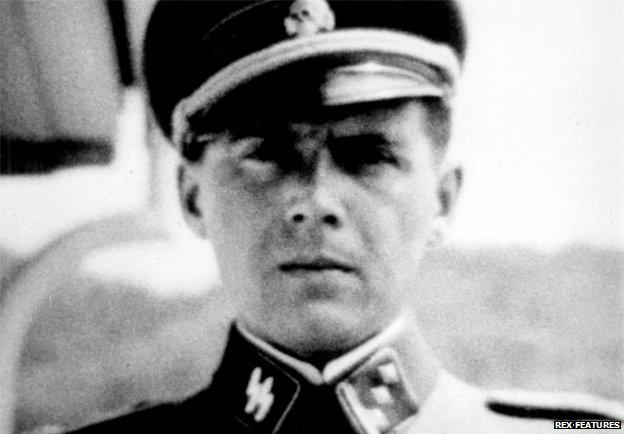
Josef Mengele was born on March 16, 1911, in Günzburg, Bavaria, Germany, into a wealthy and influential family that owned a successful manufacturing business. He excelled academically and went on to study medicine and anthropology, earning his medical degree in 1938 and a Ph.D. in anthropology from the University of Munich. His doctoral dissertation focused on genetic variations in human jaws, foreshadowing his later interest in genetics and eugenics.
Mengele became increasingly aligned with Nazi ideology during his academic career, particularly in the areas of racial hygiene and eugenics. He joined the Nazi Party in 1937 and the SS in 1938, advancing quickly due to his education and ideological commitment.
In May 1943, Mengele was assigned to Auschwitz-Birkenau as a camp physician, a position that gave him enormous power over the lives of prisoners. He became infamous for his role in the “selections” at the camp’s arrival ramp, where he decided who would be sent to forced labor and who would be sent immediately to the gas chambers. His calm and detached demeanor during these selections earned him the chilling nickname “Angel of Death.”
Mengele’s primary focus at Auschwitz was conducting medical experiments, often with no regard for the suffering of his subjects. His experiments were driven by Nazi racial theories and his interest in genetics. Many of these experiments were conducted on Jewish and Roma prisoners, particularly children and twins. These experiments included:
Twin Studies: Mengele’s most infamous experiments involved twins, whom he viewed as ideal subjects for studying heredity. He performed invasive procedures, including injecting chemicals into their eyes to change their color, amputating limbs, and performing unnecessary surgeries. Twins were often killed and dissected to compare their organs.
Experiments on Pregnant Women: Mengele conducted experiments on pregnant women to observe the effects of various chemicals and conditions on pregnancy. These experiments were often fatal for both the mothers and their unborn children.
Tests on Disease and Immunity: Mengele infected prisoners with diseases such as typhus and malaria to study their progression and the body’s immune response. Victims were often left untreated, leading to immense suffering and death.
Physical Deformities and Disabilities: Mengele also studied prisoners with physical abnormalities or disabilities, subjecting them to brutal experiments aimed at understanding “defective” traits, in line with Nazi eugenic goals.
Mengele was known for his sadistic behavior, including using children as test subjects and showing a disturbing fascination with their suffering. He often displayed a charismatic and affable demeanor, which contrasted starkly with the cruelty of his experiments. Survivors recall how he would hand out sweets to children before subjecting them to deadly procedures.
At the end of World War II, Mengele fled Auschwitz and went into hiding. He was briefly captured by Allied forces but escaped detection due to the chaotic conditions of post-war Europe and the lack of public awareness about his crimes at the time. He lived under false identities in Germany before fleeing to South America in 1949, with the help of a network of Nazi sympathizers.
Mengele initially settled in Argentina and later moved to Paraguay and Brazil, evading justice despite international efforts to capture him. The Mossad, Israel’s intelligence agency, tracked him but prioritized capturing Adolf Eichmann. Mengele lived in relative obscurity, supported financially by his family in Germany, until his death from a stroke while swimming in Brazil on February 7, 1979.
Josef Mengele’s name is synonymous with the atrocities of the Holocaust and the abuse of medical science for inhumane purposes. His experiments, conducted without consent and with extreme cruelty, contributed nothing to legitimate scientific knowledge. Instead, they served as a grotesque expression of Nazi ideology and disregard for human life.
The international outrage over Mengele’s crimes and his ability to evade justice fueled efforts to hold Nazi war criminals accountable. His actions were highlighted in the Nuremberg Doctors’ Trial, which led to the creation of the Nuremberg Code, a foundational document establishing ethical principles for human experimentation.
Mengele’s story serves as a grim reminder of the potential for science to be weaponized in the service of ideology, and his victims are remembered as part of the millions who suffered under the Nazi regime.
